
The Deck List
We used to build things by hand, reader with strong hands and a furrowed brow.1
We still do, but things like decklists would exist right there! There, in front of you on paper as a vertical list of card names as we could best remember. I remember writing a few decklist this way, but I’m not so old that I did often. It was done manually, but typed with my soft fingers2 as a .txt file or in a forum post, usually without bothering hyperlinking to the cards because that would take forever.3 If you go to archived versions of The Dojo you can see some decklists written this way.
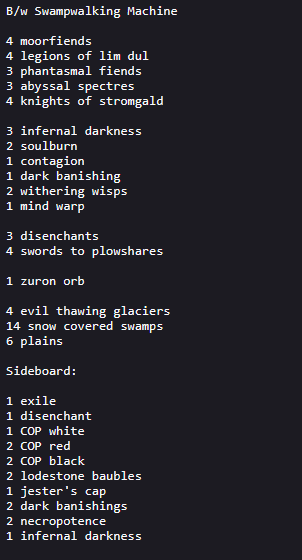
This is ancient Magic, today we have more sophisticated technology than writing out what we think the card’s name is in the back of our algebra notebook, sometimes forgetting if it’s Zuron or Zuran orb. Advanced technology like Moxfield, the deckbuilding website that I’ve used the most since I’ve returned to playing Magic with the new-fangled commander format. Easy enough to count to 100 when the website is doing it for you, showing you how many of each card type you have, and even things like mana symbol breakdown to help you tune your mana base.4 Though commander has been around longer than Moxfield (which became widely available in 2019) or similar deck building websites like Archidekt in 2018, I can’t help but believe these tools helped people create more tuned commander lists. Could Commander have been a more casual format partially because of the lack of technology around deckbuilding? It may be easier to just put all the ramp cards I have: Nature’s Lore, Rampant Growth, Kodama’s Reach, Three Visits, Cultivate, and a Harrow, into one deck instead of thinking about which ones fit best with my curve. How many one mana cantrips can I play in blue before I’m scraping the bottom of the barrel with cards like Portent?5
These deck building websites helped sort decklists, take known templates for building commanders and help visualize your mana curve to help optimize your deck. With added features like showing sample hands, tracking percentage of colors across cards, and being able to goldfish the deck on the website itself, these websites helped deck builders visualize and playtest their creations before they needed to buy any new cards.6
The Numbers
Oh, who knows, reader who has a lot of answers but I won’t press you for any. How could I possibly plumb the history of how people built these commander decks, and what would that even entail? We can never return to the past.7 We’re the future people and as future people we’re interested in future things: data!
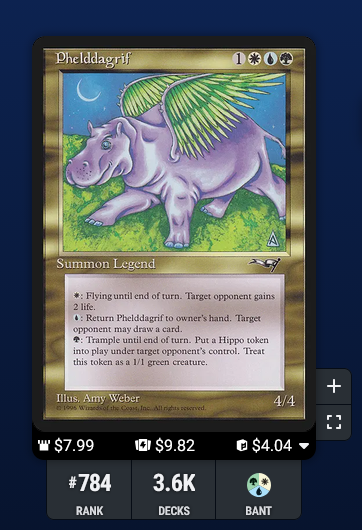
Yes, these websites bring troves of data on the deckbuilding habits of Magic players. EDHrec, gathers data through these websites to generate statistics about different cards, ranking how popular commanders are based on how many decks have been created with that commander. On EDHrec, popularity, or inclusion in certain decks, is the measure of success. Taking a look at a totally random commander, like Phelddagrif, we can see its current rank as of writing as #7848 , with a little over 3.6k decks built with it as a commander. We get stats for new cards, top cards, cards with “high lift”, whatever that means.9
Those tools are old, though, around 6-7 years old! We’re future people, remember? Keep up with the future! What’s new is CommanderTemplate.com. The website is a tool to help players build better commander decks by visualizing templates, making it easier to search and add cards, creating functional manabases, even generating the entire deck for you. She has made videos on these features as well, providing in-depth reasoning for how to build commander decks and why.
This project is really exciting: aiming to help players create consistent decks that function while letting players “do the thing”. While CommanderTemplate helps to streamline decks, it doesn’t force deckbuilders to optimize them. Not every Blind Seer deck starts with Rhystic Study and Force of Will.10
That being said, there is only 1 public decklist for a Blind Seer Commander on CommanderTemplate.11
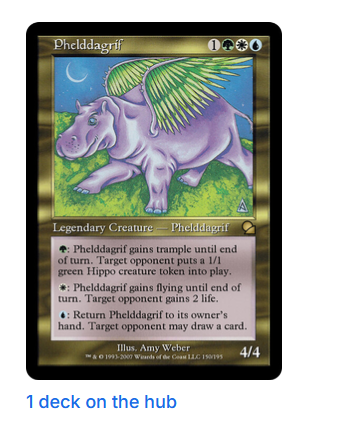
There is also only 1 public decklist for Phelddagrif on CommanderTemplate.12
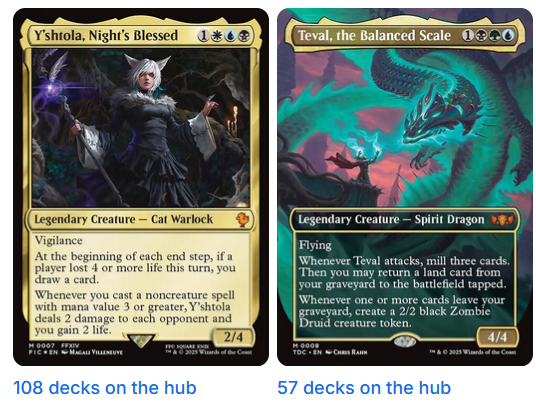
Granted, deck numbers are not really high across the board on the website, with Y’Shtola having 108 publicly available decks, and the next highest being Teval at 57, it’s not representative of how many players are playing these commanders. Y’Shtola recently becoming the #1 commander according to EDHrec with over 57,000 decks, while Teval is ninth with over 40,000 decks.
This, compared to Phelddagrif, who is the 784th most popular commander with over 3,600 decks recorded on EDHrec. Now, not everyone can be the most popular, and some commanders are going to be built more than others, and I’m glad that some people are still building Phelddagrif decks, there is something to be said13 about there being no cards that were originally printed in old border breaking the top 100 of most popular commanders. The most popular commander that was originally printed in old border is Urza, Chief Artificer, which feels a bit like a cheat.
Popularity is, obviously, reflected through recently made decks and updates.Checking Moxfield, Phelddagrif has 12 decks that have recently updated in the past day, Y’Shtola’s decks have been updated within the last three hours.14
So, bummer ending, reader! Sorry to have everything end like this, but it looks like Phelddagrif is slowly spaghettified into the black-hole of obscurity. Watch it dwindle down the drain as it gets replaced by anime cat girls and Doctor Doom. The Phelddagrif Project is over, it is no more. Break out the fiddles, because we are watching Rome burn around us.15
Water for the Roman Houses
One can’t help but think that when Dylan Thomas wrote “Do not go gentle into that good night he was anticipating the dwindling popularity of Phelddagrif from Magic: the Gathering’s Alliances expansion in the Commander format in 2026. Some poets are prophets, and some get nothing right but they have a couple good lines and we say that’s enough.
No, reader, we will not go gentle into the good night of Phelddagrif’s obscurity. The tools to fight back have always been in our hands and within our minds. We can stop Phelddagrif from being the 781st most popular commander and, with enough decklist uploads, we can maybe break the 760s.
Throw that pen away, reader. That waxing nostalgic at the beginning of this piece about writing down decklists and visiting those old forums was nonsense. A commander deck does not need community consensus to build, even though it’s really cool when people do. Commander is about personal liberty, an individualistic expression of self. Metrics based around winning are less important than having a large quantity of decklist available for the masses to gawk at and copy.
For this project, we will utilize that most advanced of deckbuilder tools: Commandertemplate’s autofill tool. With this, the Pheldd-army will build such a plurality of different Phelddagrif decks that will overwhelm the commander community with a bounty of different and competing Phelddagrif strategies. An angel typal Phelddagrif deck with a stax subtheme? Easy, press the button and it’s done. What about Phelddagrif odd-mana-value-matters with a stax subtheme? The deckbuilder can do that too. It’ll supply the manabase, the cards, the whole decklist. Just make a name and a brief description and you’ve done your part! Maybe even write a primer too, if you’re feeling saucy.
Reader, I can see your eyes bugging out of your perfectly normal looking eye sockets16 as you read the above. You may be thinking “This is an assault on human dignity!” or “I’ve never read such poppy cock self-published in such an esteemed publication before!” or “Does this not cheapen Phelddagrif into something less than the turd rolled over by the dog that shat it?” I can’t answer any of those that were questions, and the rest could be true, or, if not true, then it might be the case. Maybe, by engaging in such a project as to generate a bunch of nonsense Magic: the Gathering decks would have one lose their dignity, honor, their sense of self, and any hope they might have for the future.
Even with all that lost, think of the metrics that could be gained.
Animating Alternatives
Come now, reader whose furrowed brow is perfectly justified now. I wouldn’t want you to sink into the mire of content creation, the impulse to create merely to see a number go up, to gather metrics, to meet a deadline or goal with no intention or reason behind it, for there to be no point beyond capturing attention. No, do not go gently into that good night of creating decklists in the age of mechanical reproduction.17
Besides, even if all 6 people reading this made a decklist every day for a year, that would be something that would never happen even automatically generating the lists because that’s a lot of work and I’m already tapping out thinking of it. We would need a galvanizing force, something that makes people want to build Phelddagrif again. It’s obvious what it is, just looking at some of the top commanders:
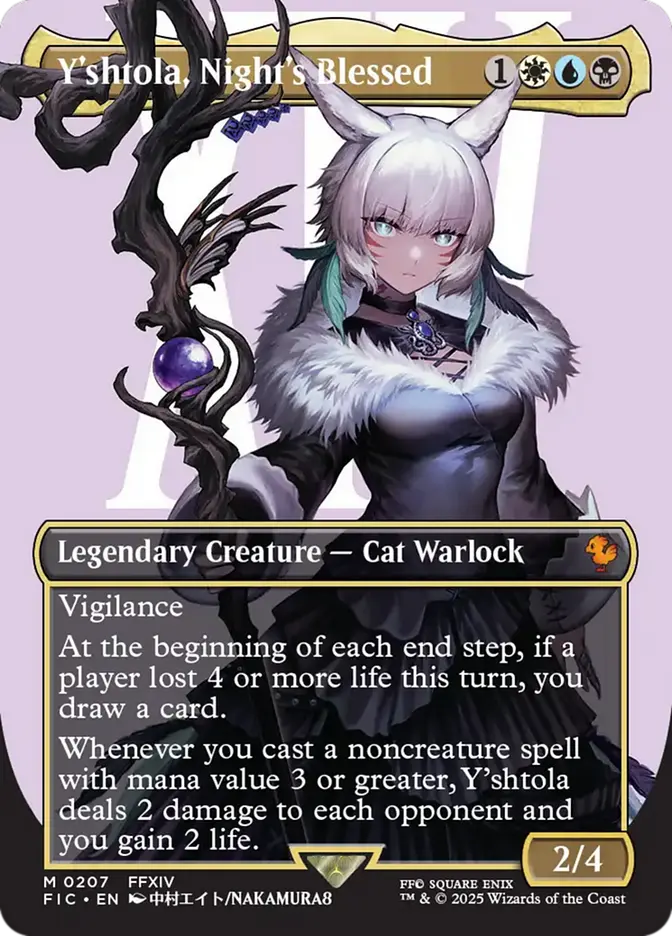
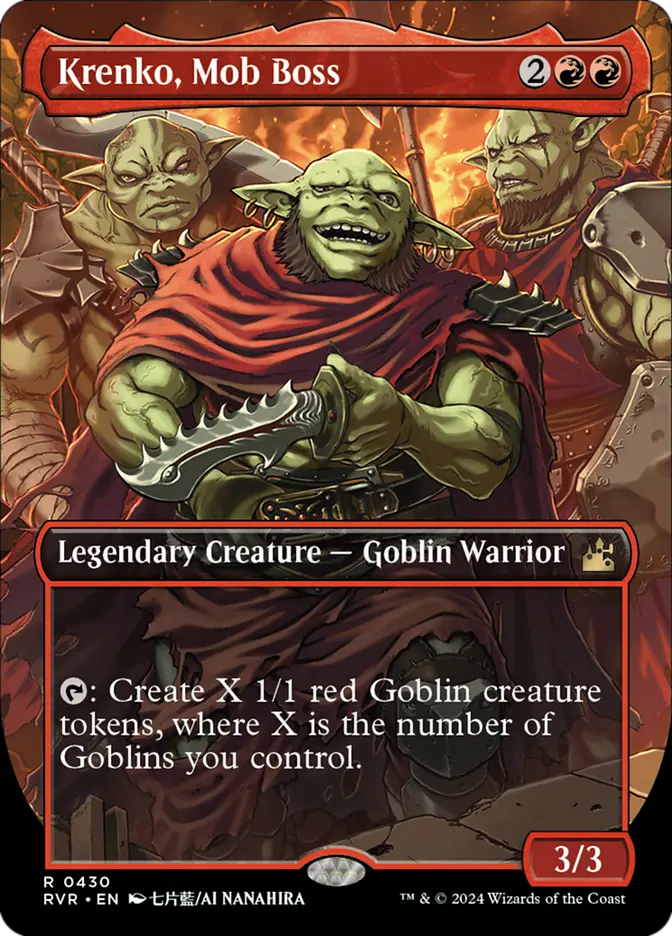
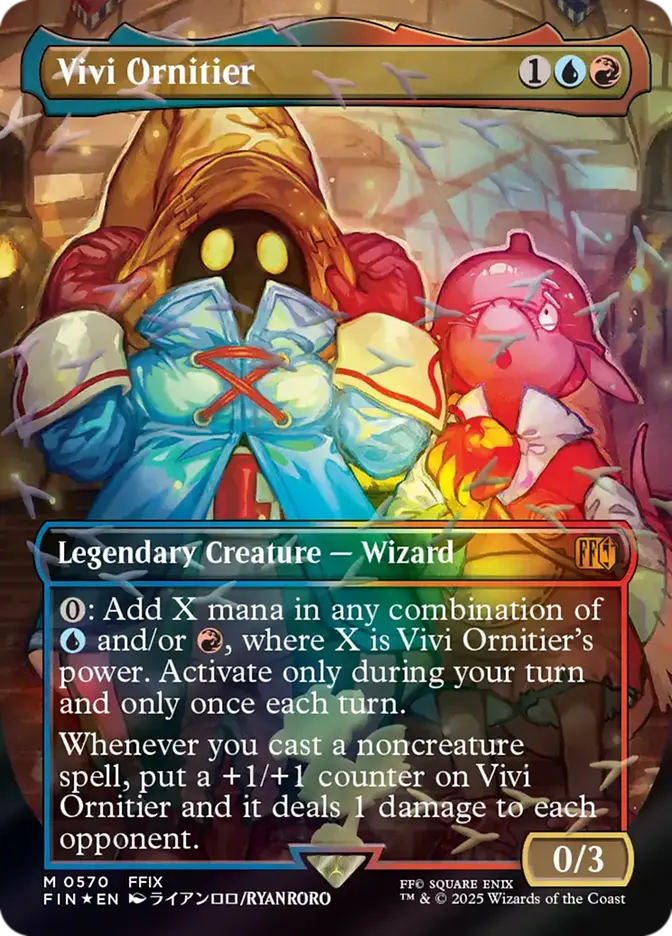
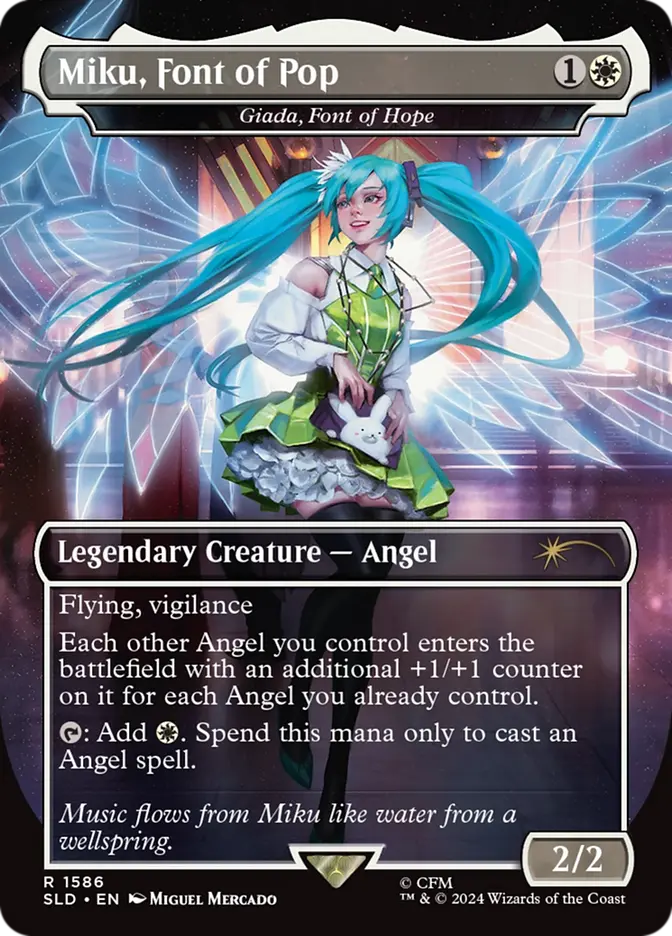
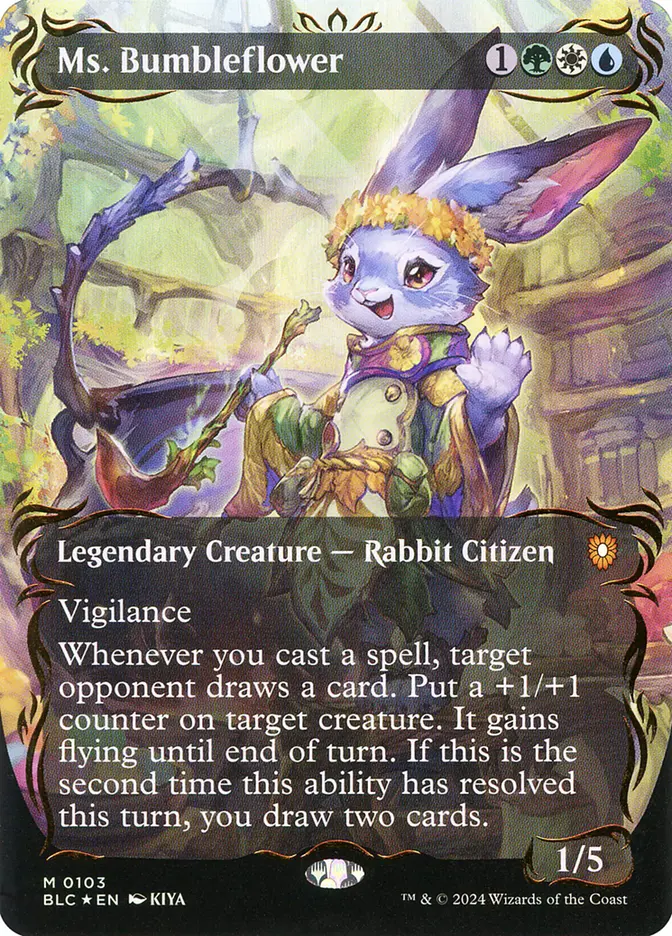
Phelddagrif needs to become an anime. Yes, the Japan Showcase treatment on cards like Ms. Bumbleflower and Firelord Azula has players frothing at the mouth ready to make more and more decks. If there was a Phelddagrif with an Anime Japan Showcase treatment it would stand to reason that it would shoot up in popularity and maybe break top 750.
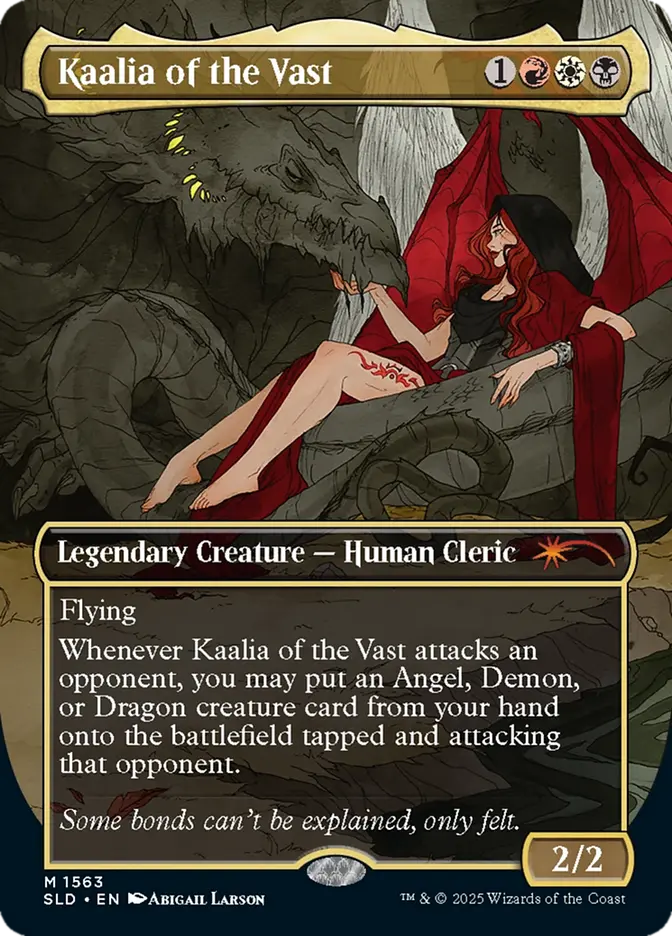
Or do whatever is going on in this Kaalia (currently #8) art, it seems to be working for her.
- What is on your mind, reader? Are you ok? You don’t need to bring such acrimony into this article already, there will be time for that soon enough! ↩︎
- The texture of my fingers? Mushroom ↩︎
- Could you imagine manually putting in links to cards? What kind of psycho would do that! ↩︎
- If you are going to do something like that ↩︎
- Reader, please don’t take this idle mind meandering as anything resembling research. I don’t know what Commander was like 10 years ago, other than Phelddagrif was maybe slightly more popular then. And the casual/tuned drive of commander deck building is not ↩︎
- Although I doubt this stopped many people from buying cards before testing their deck ↩︎
- As Harold Clitus once said “Don’t you go stepping into that river again, y’hear?” ↩︎
- Phelddagrif dropped 6 ranks while I was editing this piece, I had “#778” written here before I decided to grab a screenshot of the edhrec page for Phelddagrif. ↩︎
- I won’t rehash criticisms about EDHrec, because there’s nothing new to say, although I think it is valid that it encourages building a certain way and making commanders become a bit one-note. The most popular decklists get copied, which reinforces what is put in a particular commander’s deck, which gives it a higher score on the commander’s EDHrec page, which people keep using to build their decks. I’ve already complained about Questing Phelddagrif being included in most Phelddagrif decks as it usually doesn’t add anything mechanically to the deck, but it gets included anyways and has a “top card” status on Phelddagrif’s EDHrec page. ↩︎
- No one can stop you from including these in your Blind Seer deck ↩︎
- As of writing ↩︎
- Of note, this looks very similar to the Phelddagrif control list that has been developed for over a decade on mtgsalvation and mtgnexus, more information on that here. ↩︎
- What is to be said? Who knows! ↩︎
- Once again, as of writing. ↩︎
- In this metaphor Rome is a piece of cardboard with a picture of a purple hippo with green wings on it. It might literally be burning. ↩︎
- They are normal eye sockets, that’s why I described them that way. Don’t worry. ↩︎
- Tell me, reader, if you think this means anything. Walter Benjamin is inscrutable to me! ↩︎


Leave a Reply